Older architectural homes possess undeniable historical charm, but their underlying structural frameworks frequently fall short of modern engineering safety codes. A property owner in a historic metro district found himself facing hidden code violations when an intense hail storm damaged his aging roof system.
The homeowner, Caleb, needed an expert contractor capable of bringing his 1950s property up to code without damaging its delicate exterior profile. The building featured a traditional space decking framework beneath old shingles, alongside a premium stucco finish that wrapped tightly around the structural intersections. Resolving these residential roofing challenges required a strategic re-decking overlay and a highly specialized stucco patch process to guarantee flawless, compliant moisture defense.
Sharp Exteriors executed a structurally compliant roof replacement on a historic stucco home in St. Paul, Minnesota. The team installed a solid OSB overlay to eliminate space decking gaps, replaced all step flashings, and performed a clean stucco patch to restore the historic perimeter to peak performance.
Key Takeaways
- THE CHALLENGEExisting 1950s space board decking featured wide gaps that violated modern building codes and prohibited direct shingle installation.
- THE SPECIFICATIONTechnicians installed a solid oriented strand board overlay and completely pulled out and remade all integrated step flashings.
- THE RESULTThe property achieved full structural compliance, passed municipal inspections, and maintained a completely seamless stucco profile matching its original aesthetic.
Our operational objectives centered on executing a precision re-decking process while respecting the building unique architecture. By introducing a code-compliant board decking foundation, we provided the robust substrate necessary for optimal shingle fastening. This tactical approach allowed us to seamlessly interface modern roofing standards with historic exterior masonry.
Uncovering Non-Compliant Gaps in 1950s Framing
Our diagnostic investigation began by stripping away layers of damaged shingles to evaluate the baseline status of the timber foundation. As common in homes built across the Twin Cities during the 1950s, the structure featured original space decking instead of a solid wood deck. These wide gaps between planks were originally designed to let old cedar shakes breathe, but they lack the uniform strength required to securely anchor modern asphalt shingles.
Current regional building codes strictly prohibit shingle installations over gaps exceeding one-quarter inch. Attempting to nail shingles directly into this non-compliant decking would lead to roof failure, blowing off during high winds, and failing city inspections. Furthermore, the step flashings extending behind the heavy stucco walls were completely weathered, requiring strategic masonry alterations to avoid compromising the home envelope.
Why Must Older Space Decking Be Overlaid with OSB?
To meet current building standards, technicians executed a full-scale re-decking process across the entire structure. Our crew laid 4x8 sheets of oriented strand board directly over the older deck boards, securing a completely flat, rigid surface. This solid OSB overlay gives roofing nails the continuous depth required for a permanent hold, guaranteeing the system can withstand intense wind shear over its functional lifespan.
The next operational step involved redoing all the flashings, which is a highly delicate task on a stucco home. While some companies cut corners by applying metal counter flashing on top of the wall, we believe the best approach is to completely knock out the lower wall section, install new step flashing directly against the framing, and execute a pristine stucco patch over the tie-in.
Because Caleb is a professional painter who owns a local painting company, he requested to handle the final aesthetic color matching himself. Our team delivered a flawlessly level, smooth masonry patch after completing the metal restoration, creating a clean substrate for his final custom coatings.
Flawless Building Compliance and Masonry Integration
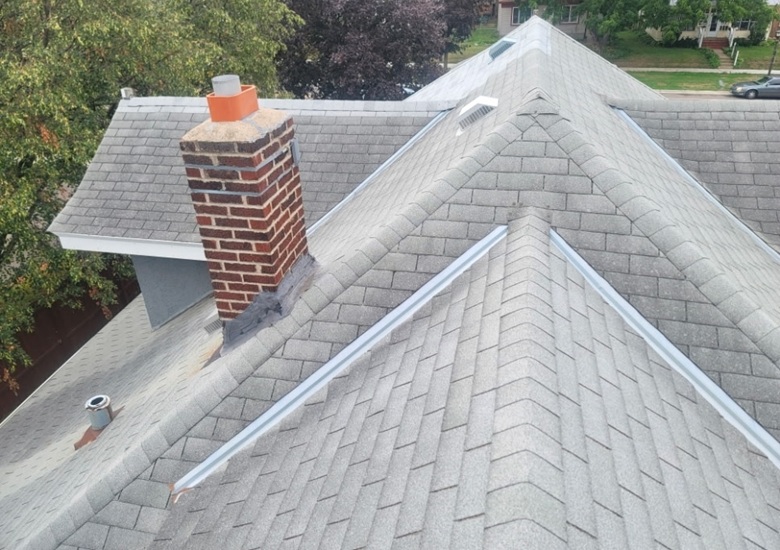
The completed project delivered absolute peace of mind through total building code compliance. By reinforcing the foundation with a solid sheet overlay, the structure easily passed its municipal building inspection. The dimensional shingles lay completely flat in a uniform pattern, eliminating the structural waving and uneven textures associated with older, shifting board roofs.
The custom masonry patch blended invisibly with the surrounding architecture once Caleb applied his final professional paint coatings. There was no remaining indication that the thick stucco wall had ever been disturbed to update the flashings. Our structured restoration process successfully upgraded a vulnerable, outdated property into a structurally sound home equipped for decades of severe weather.
Bring Your Historic St. Paul Roof Up to Current Building Codes
We possess the specialized technical expertise needed to adapt mid-century homes to modern building requirements. From solid OSB overlays to advanced masonry flashing integration, our team ensures your historic property is structurally compliant, perfectly sealed, and built to last.
Do you need help resolving these structural issues or upgrading your property in St. Paul? Contact our team to book your evaluation today.
Frequently Asked Questions
Why does 1950s space decking fail current building codes in St. Paul?
Space decking was designed for traditional wood shakes that needed open air circulation to dry out. Modern building codes prohibit installing asphalt shingles over gaps larger than one-quarter inch because the nails cannot anchor securely into open air, making a solid OSB or plywood overlay mandatory for structural compliance.
How do you change step flashing on a stucco home without causing damage?
The correct method requires carefully knocking out a clean strip of stucco directly above the roofline to expose the framing. We replace the step flashing components against the structural wood, apply a watertight barrier, and then execute a custom stucco patch that seamlessly matches the original wall texture before painting.
What is the difference between dimensional and three-tab shingles?
Three-tab shingles lay completely flat in a repetitive brick-like grid pattern and provide lower wind resistance. Architectural or dimensional shingles feature varying layers of heavy asphalt material, producing a highly textured appearance, enhanced curb appeal, and superior durability against severe storm damage.